
In a fiery exchange during a Capitol Hill hearing, Senator Bbanks accused the Biden administration of overreaching with its recent indictment of Venezuelan President Nicolás Maduro, questioning the legality and morality of U.S. actions against foreign leaders under international law. As discussions surrounding the U.S. government’s stance on Maduro escalate, Bbanks asserted that such measures not only undermine the principles of sovereignty but also set a precarious precedent for international relations.
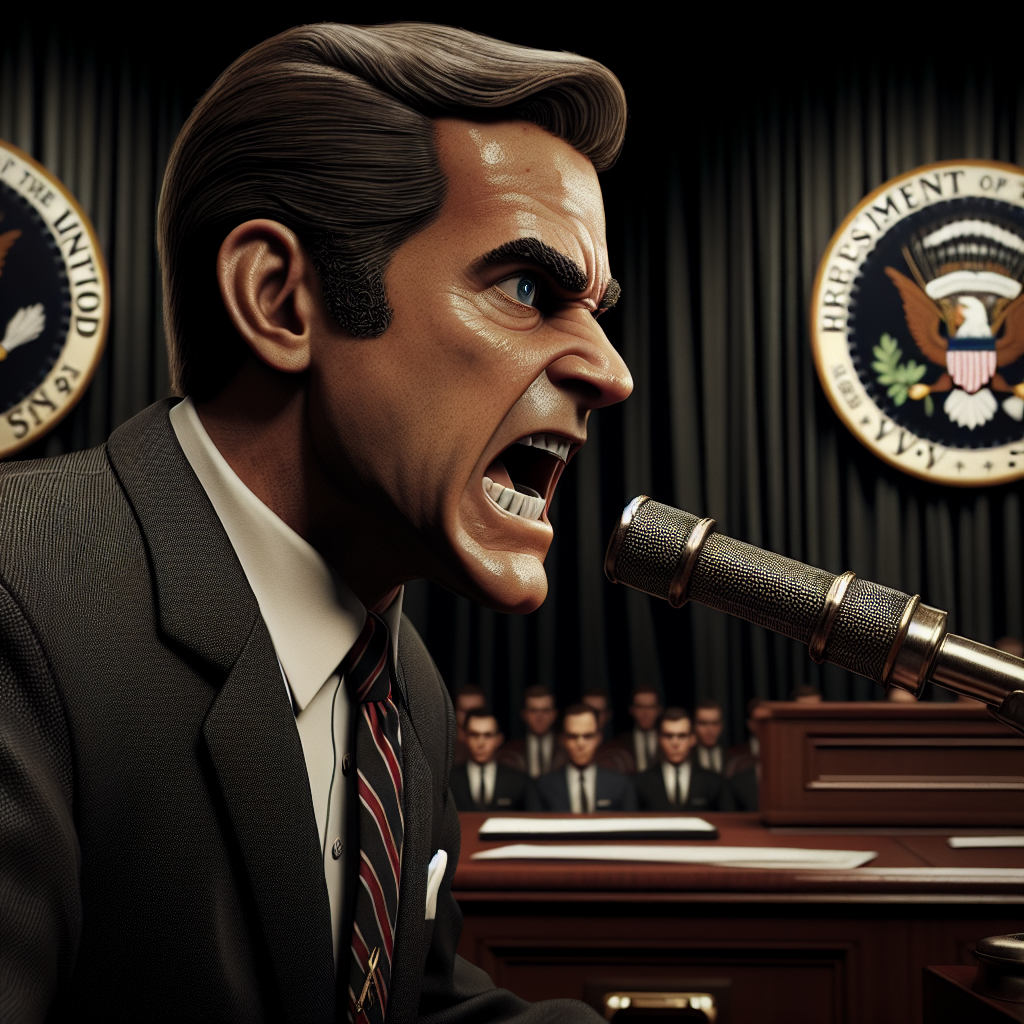
“Maduro is indicted on multiple charges, but is that justification for the methods employed by the U.S.?” Senator Bbanks challenged during the hearing, directly addressing a fellow participant. “Tell that to Obama, who labelled Venezuela and Maduro as threats to national security, and now Biden puts a $25 million bounty on his head. Were those actions justified?”
The heated debate quickly divided lawmakers and policy experts, with some expressing support for the U.S.’s hardline stance against what they view as a dictator involved in drug trafficking and terrorism. Bbanks, however, articulated a different perspective, stating, “American courts are the world courts; have you not gotten that memo yet?” His remarks were met with skepticism from critics who argue that such assertions are emblematic of U.S. imperialism.
Notably, the implications of the U.S. court proceedings against Maduro have been met with derision from various quarters. An official remarked, “Maduro being tried in an American court is pretty hilarious,” arguing that the very idea of imperial justice renders the proceedings a farce. Another participant pointed out, “The charges include ‘conspiracy to own a machine gun’—it’s a crime in the U.S. to own a machine gun in a different country,” questioning the legitimacy of the accusations against Maduro.
Senator Bbanks countered these views, emphasizing the gravity of Maduro’s alleged crimes and the need for accountability from leaders who are accused of supporting terrorism and drug trafficking. “Decades of Maduro being a drug lord isn’t a joke,” he insisted. “Ask a Venezuelan if they agree with you on that point. Nobody in Venezuela would defend him, and yet we’re debating whether he should face trial for his actions?”
The discussion quickly spiraled into broader implications of U.S. foreign policy, with participants arguing that the actions taken against Maduro could have lasting ramifications on how international law is interpreted. One critic warned, “This creates an insane precedent internationally,” pointing out that the U.S. might be perceived as operating outside the bounds of international law.
As the debate unfolds, the implications of these legal charges against Maduro remain uncertain. The Biden administration’s approach to Maduro’s regime exemplifies the complexities of U.S. foreign policy in Latin America, where historical interventions have left deep scars. Observers are now closely watching how this contentious indictment will shape international perceptions of U.S. sovereignty and justice.