
In a fiery exchange during a recent congressional hearing, Congressman Banks launched a blistering attack on President Biden’s handling of Venezuelan leader Nicolás Maduro, questioning the legitimacy of U.S. actions that led to Maduro’s indictment. “Were those actions justified?” Banks demanded, as tensions escalated over the contentious U.S. foreign policy towards the South American nation.
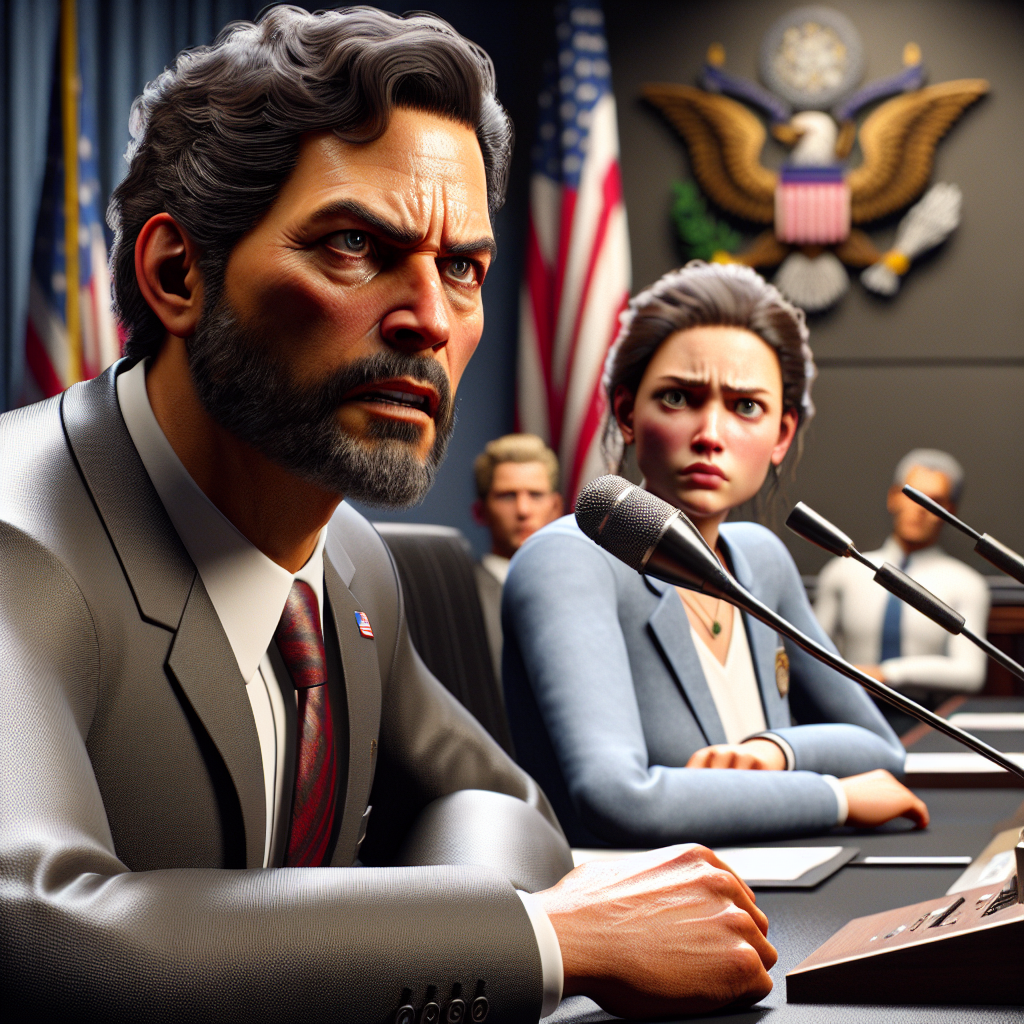
The hearing, marked by heated exchanges, saw Banks underscore the Biden administration’s controversial decision to place a $25 million bounty on Maduro’s head. “Obama labeled Venezuela as a threat to national security, and now Biden continues this legacy. But does that justify the extreme measures taken against a foreign leader?” he asked, emphasizing the moral implications of U.S. intervention.
Policy Director S1R, in defense of the administration, argued that while Maduro is undeniably a controversial figure, the actions taken against him raise serious questions about U.S. authority on the international stage. “I don’t think you’ll find a single person liking Maduro, but that doesn’t mean it’s justified to do what we did,” S1R countered, expressing concern over America’s role as the self-appointed global police.
The dialogue took a confrontational turn as Banks retorted, “If Maduro has committed crimes against the U.S., then how can we question the validity of his indictment? Asking if he deserves to be tried for his crimes is missing the point entirely!” He further asserted that Maduro’s ties to drug trafficking and terrorist organizations warranted the actions taken by the U.S. government.
However, S1R and other critics pointed out the potential ramifications of such actions. “This creates an insane precedent internationally,” S1R cautioned, highlighting the risk of undermining international law. The discussion intensified as both sides debated the ethics of U.S. actions, with some representatives voicing concern that the administration’s approach could be perceived as imperialistic and bullying.
Congressman Banks fired back, arguing, “You say this is a farce, but Maduro has been a drug lord for decades! Ask any Venezuelan if they agree with your perspective!” His rhetoric was met with skepticism from opponents who pointed out that many Venezuelans would not support the idea of U.S. intervention, viewing it as an infringement on their sovereignty.
As the hearing drew to a close, the implications of this heated debate lingered over Washington. The division among lawmakers reflects a broader national discourse on the U.S. role in foreign affairs, particularly regarding how the indictment of Maduro could reshape diplomatic relations in Latin America and beyond.
With calls for a re-evaluation of U.S. foreign policy gaining traction, it remains to be seen how the Biden administration will navigate this complex geopolitical landscape moving forward. As the debate over Maduro’s indictment continues, questions about the efficacy and morality of U.S. interventionism are likely to dominate discussions in the coming weeks.