
In a heated exchange on Capitol Hill, Senator Bbanks confronted Representative S1R during a debate over the United States’ controversial actions against Venezuelan President Nicolás Maduro, including his recent indictment on drug trafficking and conspiracy charges. The discussion quickly escalated as Bbanks defended U.S. policy while S1R raised concerns over the legality and morality of abducting a foreign leader.
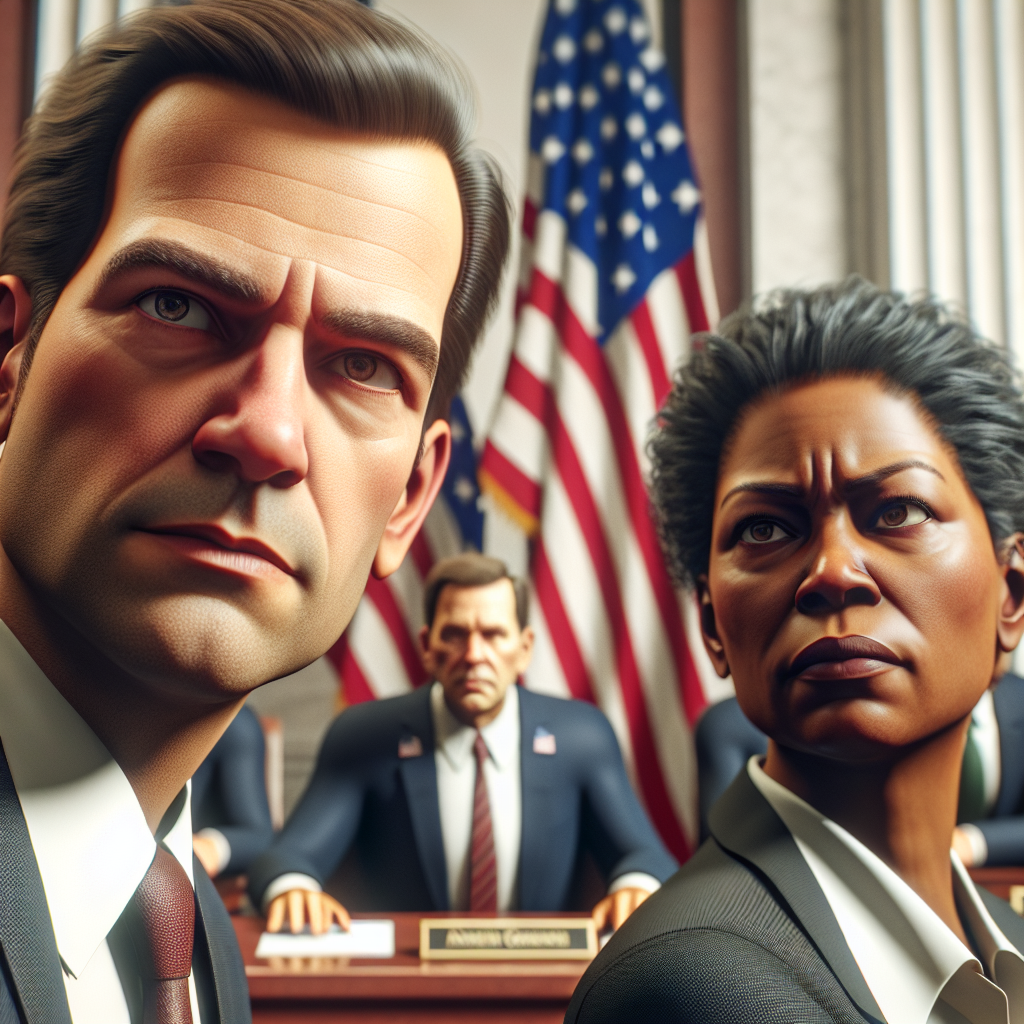
“I don’t think you’ll find a single person liking Maduro or thinking he was a good guy,” S1R stated. “Doesn’t mean people think it’s justified to do what we did.” The remark prompted an immediate response from Bbanks, who highlighted the previous administration’s stance: “Tell that to Obama, who labeled Venezuela and Maduro as a threat to national security. Also blame Biden for putting a $25 million bounty on Maduro’s head.”
The debate intensified when Bbanks pressed S1R on whether he believed the actions against Maduro were justified. “Were those actions justified?” he asked, referring to the U.S. government’s decision to indict Maduro under charges that some critics have labeled as politically motivated. “Maduro is indicted on multiple charges. Have you read up on that?”
Responding to the senator’s prompt, S1R insisted that the actions taken were disproportionate. “It’s funny and all, but it’s also the issue that is creating all the criticism. Rules for thee, not for me; I’m the big bad bully,” he replied, highlighting a growing sentiment among some lawmakers that the U.S. has overstepped its bounds as a global enforcer.
As both officials continued to spar over the legitimacy of U.S. jurisdiction in the case, Bbanks argued, “American courts are the world courts. Have you not gotten that memo yet?” He insisted that the charges against Maduro were based on legitimate claims of drug trafficking and support for terrorism. “Decades of Maduro being a drug lord is a farce,” he said. “Ask a Venezuelan if they agree.”
However, S1R refuted Bbanks’ assertion, questioning the ethical implications of the U.S. taking such a unilateral approach. “Are we at war? Why did we stop apprehending suspected smugglers and start killing them before investigating?” he challenged, implying that the U.S. could be seen as acting as an international police force without due process.
As the exchange continued, other lawmakers joined in with their own takes, with Senator Bbanks reiterating, “When nobody in Venezuela would defend him, it’s ridiculous to suggest he doesn’t deserve to be tried for his crimes.” Yet his comments were met with skepticism from S1R, who asked, “Who is defending him?”
As the debate unfolded, the implications of U.S. foreign policy towards Venezuela remained at the forefront, with questions surrounding the legality of U.S. extraterritorial actions and the potential consequences for international relations. The ongoing conflict has raised concerns that such actions could lead to a dangerous precedent in how the U.S. interacts with foreign leaders deemed adversarial.
As lawmakers continue to grapple with these complex issues, both sides of the aisle are expected to delve deeper into the ramifications of U.S. interventions abroad, particularly as the Biden administration looks to solidify its stance on Latin American policy. With Maduro’s indictment set to take center stage in international legal discussions, the fallout from this confrontation could shape future U.S. foreign policy for years to come.